
Dibri Now Monitors Websites from 3 Locations
Website checks now run from the United States, Central Europe and Eastern Europe, helping Dibri tell a real outage from a local network problem.
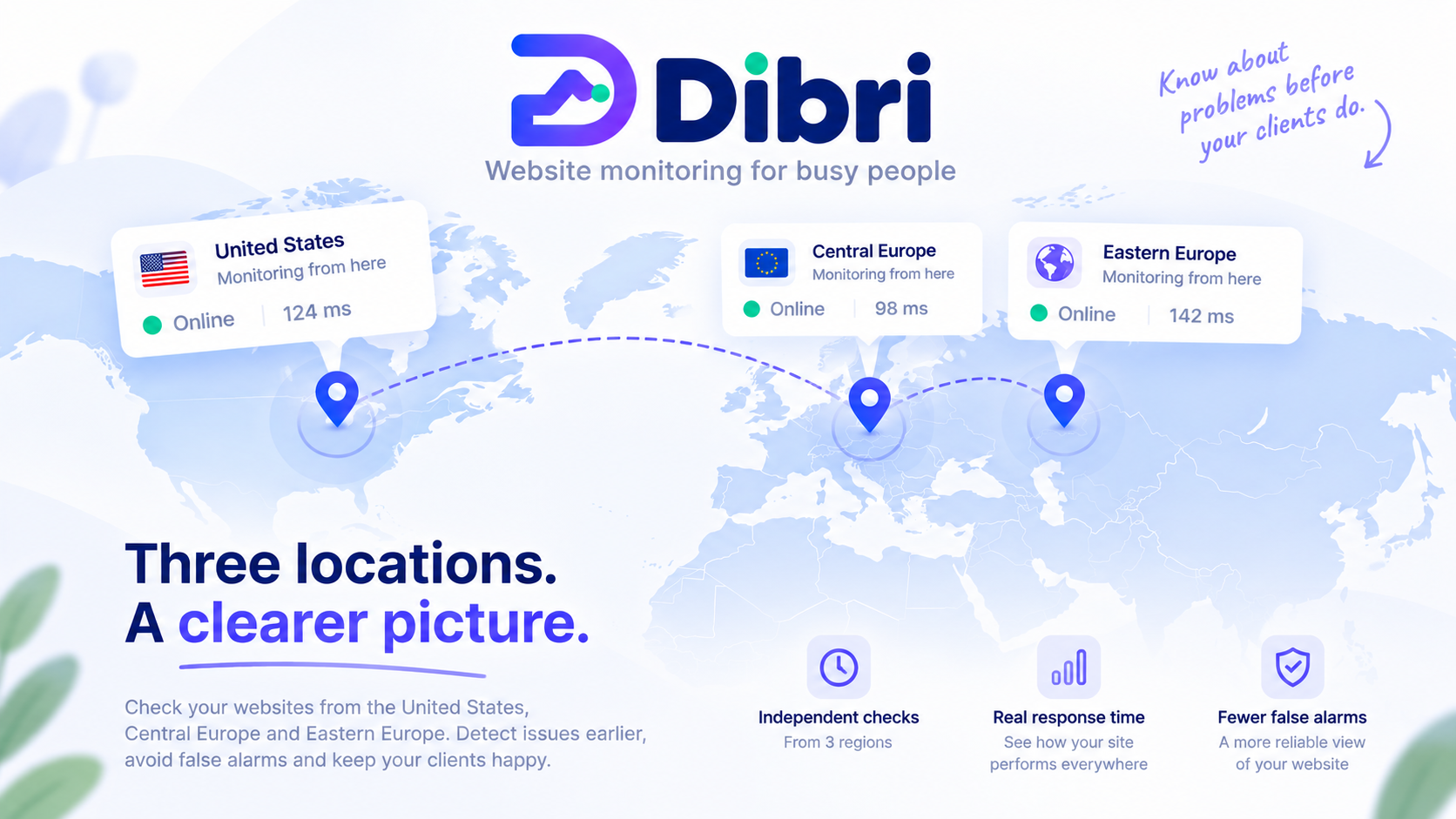
One check is good. Three are better.
Until now, checking whether a website was available gave us only one point of view. And the internet doesn't always break everywhere at once.
A website might be perfectly reachable from one network while being slow or completely unavailable from another. Or the problem might be with the monitoring location itself rather than the website.
So Dibri now checks websites from three independent locations:
United States
Central Europe
Eastern Europe
Each location performs its own check and measures response time independently.
Fewer false alarms
The important part isn't just having three dots on a map.
Dibri compares the results before deciding that a website is actually down.
If one location can't reach the site while the others can, we don't immediately treat it as a website outage. If multiple locations confirm the problem, Dibri can be much more confident that something is actually wrong.
This helps avoid unnecessary alerts caused by temporary routing problems, regional network issues, or a problem with one monitoring location.
Response time from different regions
The dashboard now also shows response time for each monitoring location separately.
This gives a quick idea of how the same website behaves from different parts of the world and makes unusual changes easier to notice.
And, admittedly, having three points on the map is also much nicer than having one. :)
What's next?
Three locations are just the beginning.
The monitoring system isn't tied to specific infrastructure, so we can add, move or replace locations as Dibri grows.
For now, the goal remains the same:
know about website problems before your clients do.